Your team is already building with AI. What turns code into software?

AI coding tools have made individual developers dramatically more productive. But productivity alone doesn't create a scalable engineering organization.
As AI adoption grows, teams need shared standards, review processes, and architectural foundations that keep quality, security, and maintainability intact. Otherwise, every project becomes its own experiment.
Our AI Engineering Framework helps teams turn successful individual workflows into a repeatable engineering practice. With shared conventions, guardrails, and a production-ready foundation, developers and AI agents can work together without creating operational debt for the rest of the organization.
Sound familiar?
The good news: most of them become manageable once teams establish shared standards, clear ownership, and consistent ways of working.

"We're not entirely sure what the AI pulled in.“ AI assistants can add packages, libraries, and tooling in seconds. Keeping track of what's actually needed, what's maintained, and what introduces risk becomes increasingly difficult.

"Every application is its own little island.“
Four teams, four setups, four different solutions to the same problem. Valuable knowledge stays within individual teams instead of becoming part of a shared engineering practice.
"Our design system is drifting."
The design system already exists, but AI doesn't automatically know how to use it. Instead of reusing established components, new variants appear with every feature. Over time, product and design system drift further apart.
"Secrets are scattered across the codebase." API keys in source code, credentials in configuration files, dependencies nobody reviewed. AI moves fast, but security standards often struggle to keep up.
"IT would never deploy this." The prototype works. Production readiness is a different story. Missing tests, CI/CD pipelines, monitoring, and operational safeguards turn promising applications into deployment risks.
"Who actually wrote this?“ Was it a developer or an AI agent? Nobody can tell anymore. Pull requests grow larger, reviews become harder, and ownership starts to disappear along with accountability.
What it takes to make AI-assisted development scale
AI-assisted software development needs more than powerful tools. It needs shared standards, technical safeguards, and a foundation teams can build on. Our AI Engineering Framework is built around three core pillars.

Team Standards
Shared conventions for AI agents, code reviews, permissions, and tooling. From AGENTS.md and engineering guidelines to approval workflows for MCP servers, integrations, and plugins.

Engineering Guardrails
Automated quality checks, security policies, dependency governance, and review workflows that surface risks early and help teams maintain consistent quality at scale.

Reference Architecture
A production-ready foundation for modern web applications. Built on over 15 years of hands-on experience with React, TypeScript, and the engineering practices that make software maintainable in the long run.
A Quick Glossary of AI Engineering Terms

Term
Guardrails, Policies and Permissions

What it means
The rules that define what an AI agent can do on its own, and where human approval is required.
What we use: Permissions, hooks and allowlists that control access to repositories, infrastructure, tools and external systems. Agents can move fast, but only within clearly defined boundaries.
Term
AGENTS.md, Context and Team Rules
What it means
The shared instructions every agent follows before writing a single line of code.
What we use: An AGENTS.md file that captures your team's conventions, architectural principles and workflows. Modern coding agents such as Cursor, Claude Code, Codex and GitHub Copilot can use these instructions as persistent context.
Term
Scaffolding, Starter Kits and Reference Architectures
What it means
The foundation new applications are built on.
What we use: A production-ready starter repository with authentication, testing, CI/CD, security checks and team conventions already wired in. New projects start from a proven baseline instead of a blank folder.
Term
MCP, Tools and Connectors
What it means
How AI agents interact with your real-world systems.
What we use: Curated MCP servers, integrations and internal tools with controlled permissions and versioning. Agents can work with design systems, documentation, APIs or business systems without bypassing governance.
Rolling out an AI Engineering Framework
Like any good AI system, we need context before we can produce meaningful results. We spend time with your team, review your existing applications, and understand your stack, infrastructure, design system, and internal requirements.
A collaborative workshop brings together engineering, product, IT, security, and everyone else involved in shaping how AI is used across the organization.
Workshop · 1–2 days on site

Built in Production | We recommend what we actually use
We don't teach workflows that only exist in slide decks. The conventions, review pipelines, and guardrails we introduce have been shaped by years of building software for clients and in our own products.
Some of that work is public. Our open-source configurations on GitHub bundle security policies, quality gates, and supply-chain controls that teams can adopt and extend.
The AI landscape changes every month. We continuously test new models, tools, and agent workflows to separate lasting improvements from short-lived hype. If something doesn't hold up in practice, we don't recommend it.

Home Turf | AI is strongest where we have the deepest experience
Modern AI coding tools perform remarkably well in the TypeScript ecosystem. React, Next.js, Tailwind, and the surrounding tooling are among the most common technologies in today's web development landscape, which means models have learned their patterns, conventions, and best practices exceptionally well.
TypeScript adds another layer of confidence. When a model invents an API, a property, or a type that doesn't exist, the compiler often catches it immediately. Problems surface during development instead of weeks later in production.
That's good news for us. We've been building software in this ecosystem for more than fifteen years. The technologies AI coding assistants rely on today are the same ones we've been refining our craft with for over a decade.
Not sure whether this is the right fit for your team? Let's look at your current setup and talk through whether an AI Engineering Framework would actually help.

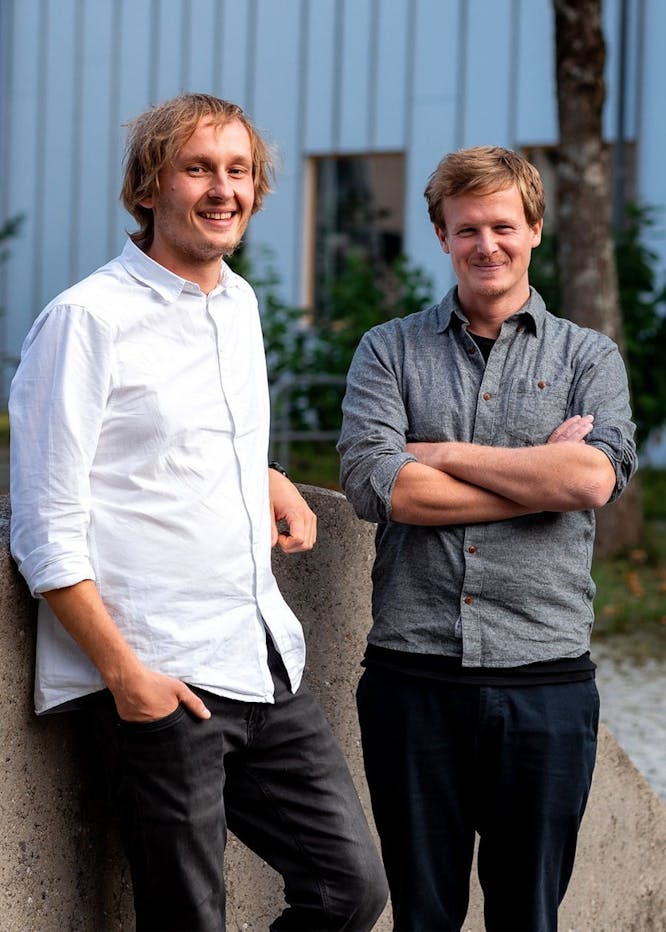
Michael Jaser, Co-Founder





What our AI Engineering Framework includes
Team standards and agent rules
Shared conventions for AI agents, code reviews, permissions, and tooling. AGENTS.md, coding standards, and team workflows make implicit knowledge explicit.
What used to live in individual developers' heads becomes documented, versioned, and reusable across the team. That gives Cursor, Claude Code, Copilot, and your developers the same foundation to work from.
Reference Setup and Quality Gates
A forkable repository with authentication, tests, CI/CD, security checks, and multiple layers of automated quality assurance. From pre-commit hooks and static analysis to supply chain checks, AI reviews, and human review, each layer catches a different class of issues.** The checks are ordered from inexpensive to expensive, ensuring problems are found as early as possible. AI-generated code never reaches production without review.**

Skill and Tool Governance
Curated skills, MCP servers, and integrations for your infrastructure. Permissions, approvals, and versions are clearly defined, making agent capabilities transparent and auditable. Plugins run with the same permissions as your developers. That is why we rely on allowlists, version pinning, and human approvals instead of auto-updates and uncontrolled tool sprawl.

Architecture, access control, and compliance
Access control is modeled once, enforced consistently across the stack, and tested down to database queries. Standards such as OWASP, NIS2, and the EU Cyber Resilience Act are considered from day one. They become part of architecture, processes, and tooling instead of something teams have to retrofit later.
Still have questions? In a short call, we can help you figure out which part of the framework would be most useful for your team.
Michael Jaser, Co-Founder
FAQs about the AI Engineering Framework and Enabling
How do you introduce AI coding tools responsibly? Which standards does a team need? And how do you keep AI-generated code reviewable, secure, and maintainable? Here are the questions we hear most often.
We are intentionally tool-agnostic. Standards like AGENTS.md are supported by tools such as Cursor, Claude Code, Codex, and others.
Our goal is not to lock your team into one vendor. It is to establish shared standards that remain useful when models, tools, and workflows change.
We recommend tools based on fit and usefulness, not partnerships or vendor incentives.
How mature is your AI development setup?
Some teams already have standards in place. Others are still exploring what AI means for their engineering process. In an initial conversation, we'll assess your current setup and identify the areas where structure, tooling, or governance would have the biggest impact.
Afterwards, you'll have a clearer picture of what makes sense for your team, and what doesn't.